
Personalizing Qwilr Pages with Variables
Variables offer your team a quick and easy way to add personalized details to Qwilr Pages. You don't even need a CRM!
Hi {{first_name}}.
Okay, that's not super engaging — but imagine if that said your name! Or your buyer's name. Or your buyer's cat's name! The possibilities are (almost) endless. Variables allow you to add a whole other level of personalization.
In this article:
- Preparing a Template
- Setting up your API Variables
- Adding Variables to the Template
- Styling Variables
- Adding Variables for images, videos, maps, embeds, buttons, and alt text*
- Creating a new Page, filling in the Variables
- Maintaining your API Variables
- Variables FAQ
Preparing a Template
This process begins with a Qwilr Template. If you have some Templates you've already converted, you can click on Templates on the left-hand side of your Qwilr Dashboard and open any Template for editing.

To create a new blank Template, click the Create Blank Template button.

Don't have a Template yet? No issues! You can also start by creating a Qwilr Page. While you're editing it, head to the top right corner and click the Make Template icon.

Your Template will stay open so you can start adding some variables.
Setting up your API Variables
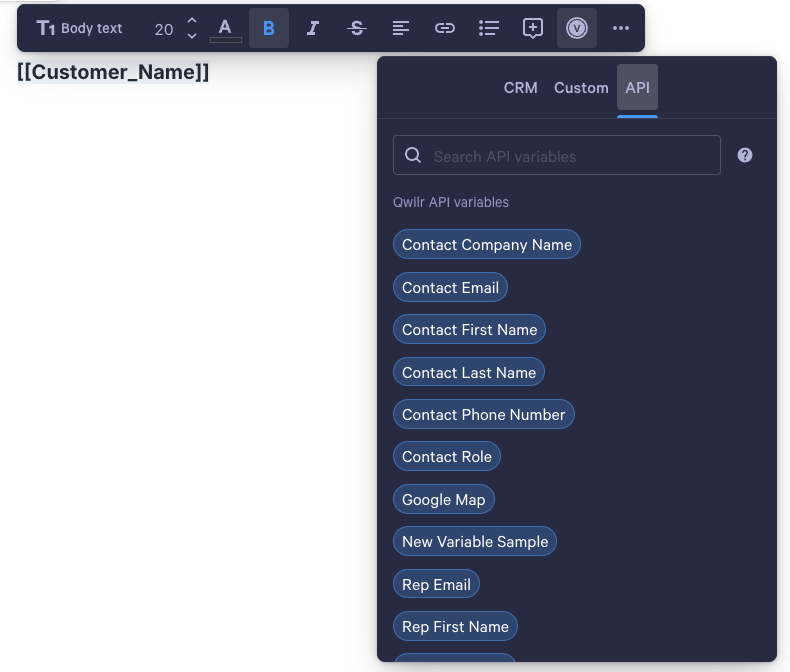
In the top right corner of the Editor, you'll notice that the Template conversion icon has been replaced with a Variables icon. Click that to get started, then click the API tab.

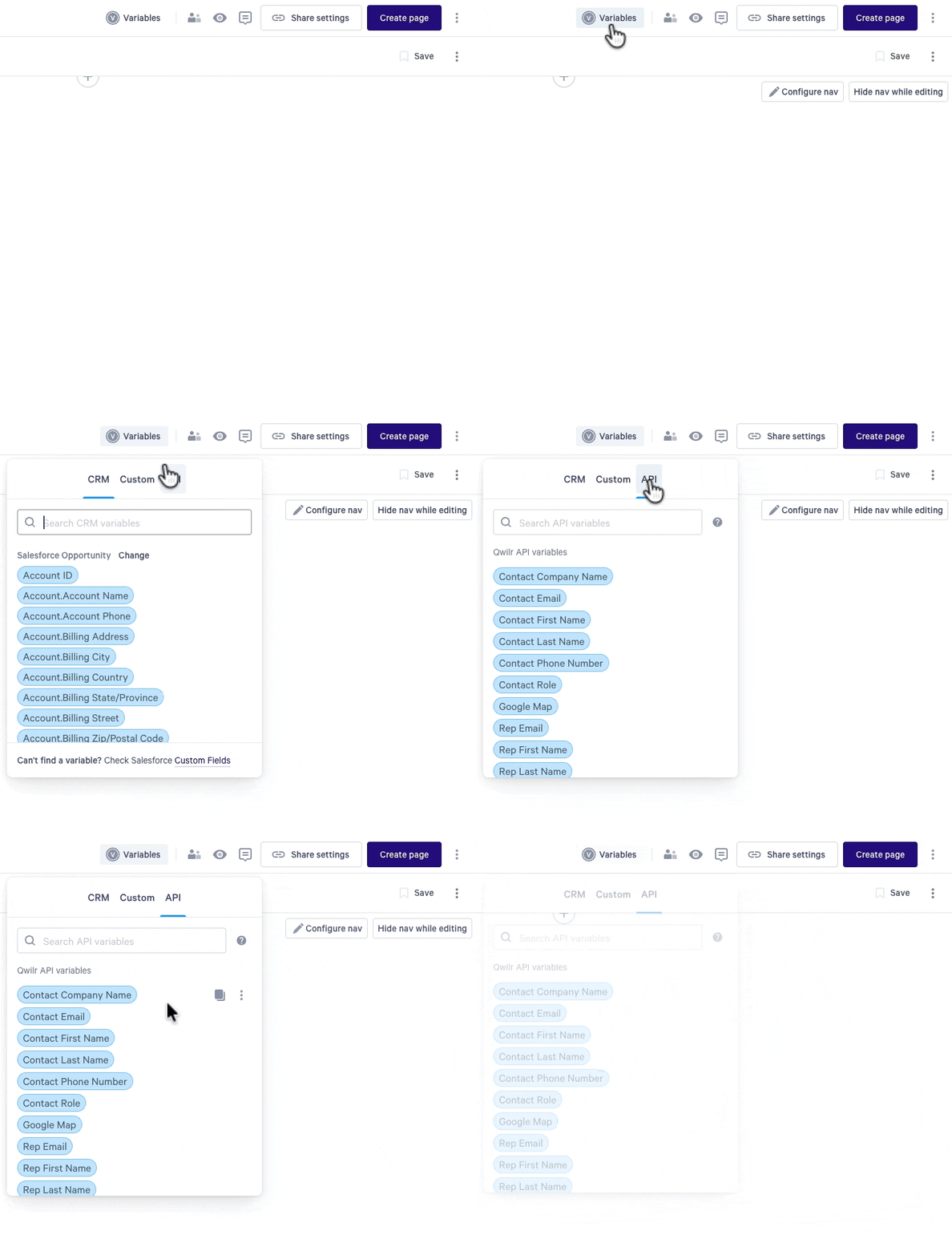
Note: API Variables can be used right inside Qwilr. When you create a Page from your Template, you’ll fill them in using the form that appears, with no API needed. They can also be filled in using the Qwilr Public API.
The first time you use the Variables tool, you'll see a list of default Variables. We added these because they're commonly used, but you can also create as many custom Variables as you need.
To create a new Variable, type the name you want in the search bar. If no Variable matches, click + Create Qwilr API variable at the bottom. Choose the Type, enter a short Name that your team will easily recognize, then click the ✓ to save it.
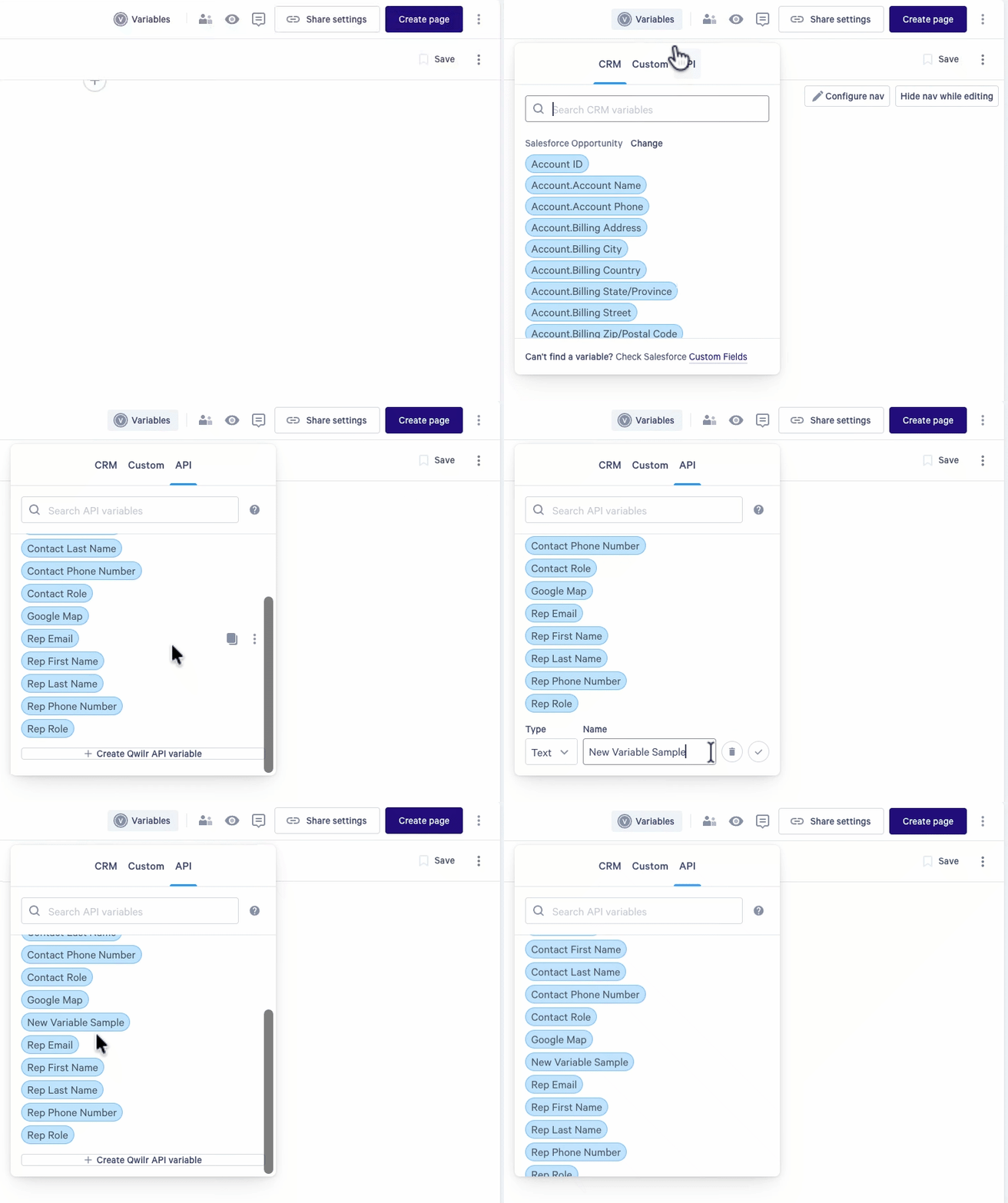
Adding Variables to the Template
When you have all of your Variables created, it's time to add some to your Template.
You can add as many Variables to each Template as you need. You can use any Variable multiple times, and you don't have to use every Variable in your list!
There are three ways to add Variables — choose the one you like best.
Copying and Pasting
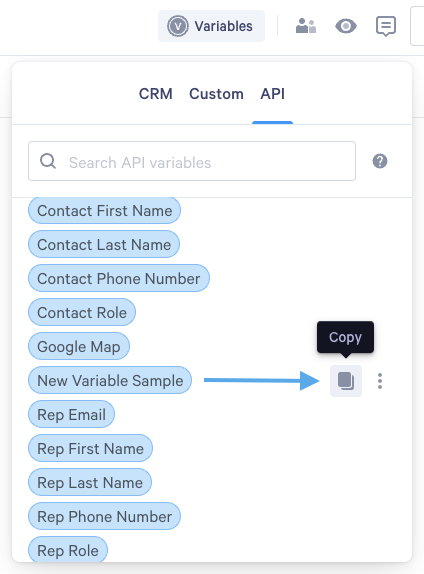
Next to each Variable, you'll see a Copy button. Click that to copy the Variable. Then place your cursor where you want the Variable, and use your key command of Ctrl-V or Cmd-V to paste it.
Dragging and Dropping
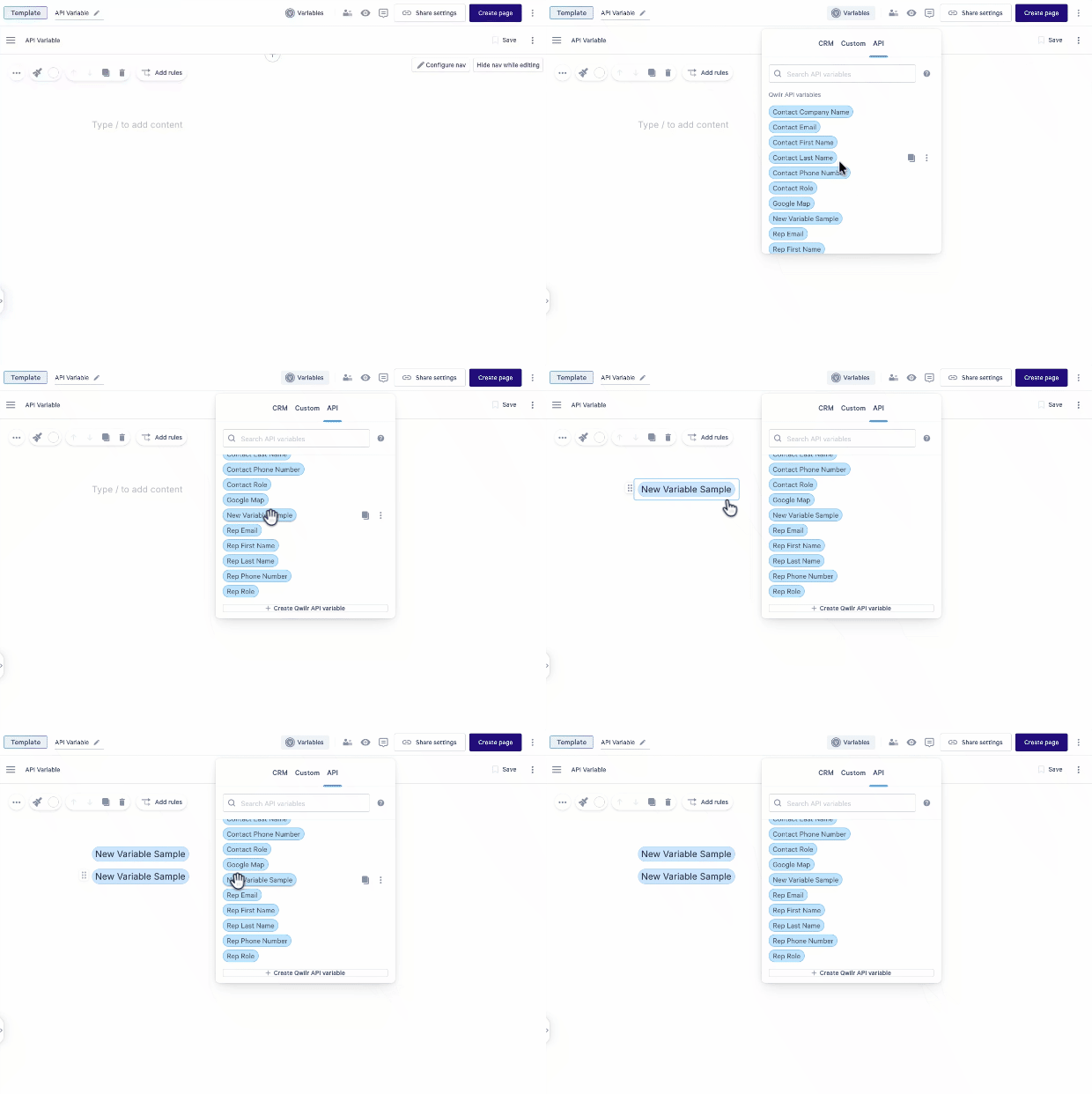
Alternatively, you can click on the Variable and drag it to the location in the Page. Then drop it.
Typing Variables
This option is great to use while you're writing your Template content. Anywhere in your Template, type two open curly brackets, like this: {{
That will bring up your Variable list within the Template, and you can choose the one you need.

Variables in your title
Using the same method as above, in the title of your Template at the top-left corner, you can also type this: {{ to open up your Variable list and enter a Variable in your title.
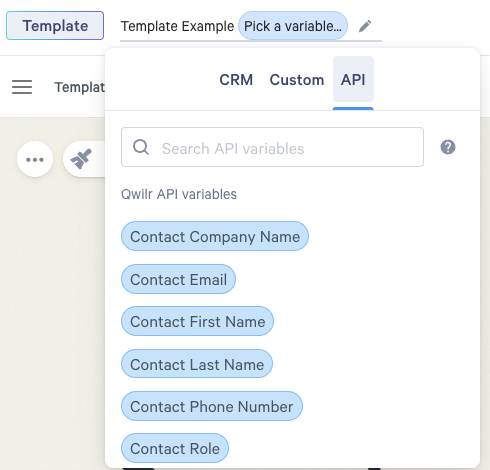
Note: If you are using a CRM integration you can include Variables from your CRM in the title using this same method. For more on CRM Templates and Variables, click the link here.
Styling your Variables
Variables can be styled by clicking on the variable itself to reveal the context menu in the editor.

Here you will have several styling options.
- Font category (like Body text, Heading text, etc.)
- Font color
- Bold, Italic, or Strikethrough
- Font size
- Font type
- Font weight, line height, letter spacing, top and bottom spacing, etc.
When the variable is populated in the created page, it will inherit these style attributes.
Creating a new Page, filling in the Variables
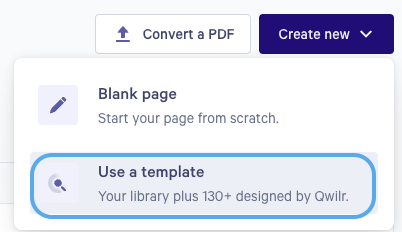
Your Template is now ready to use! Start from your main Dashboard. Click the Create New button, and then choose Use a Template.
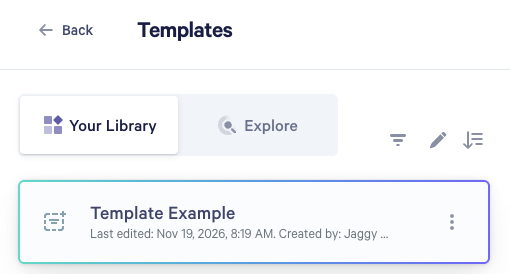
In your Template Gallery, choose the Qwilr Template you want to use, and click on the tile to preview it.
Head to the top right corner of the Template preview, and click the Create Page button.

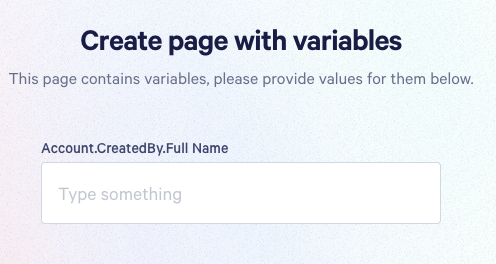
A form will pop up, with a field for each Variable you've used. Fill in the personalization for each field, and then click Next.
Then, type in the Page title and choose the Folder you want the Page to be stored in, then click Create Page again.
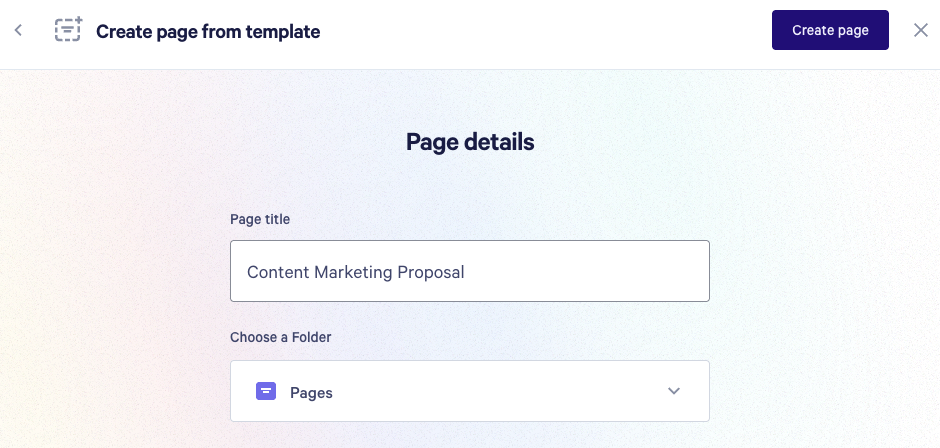
Just like that, your new page is personalized! (You can edit in any way you like from here.)

Maintaining your API Variables
You can add new Variables to your account at any time. To get started, open any Template for editing (or create a new one).
Click the Variables icon, then click the API tab and create the Variable the same way as above.
Need to remove a Variable? Click on the 3-dot icon and choose Delete.
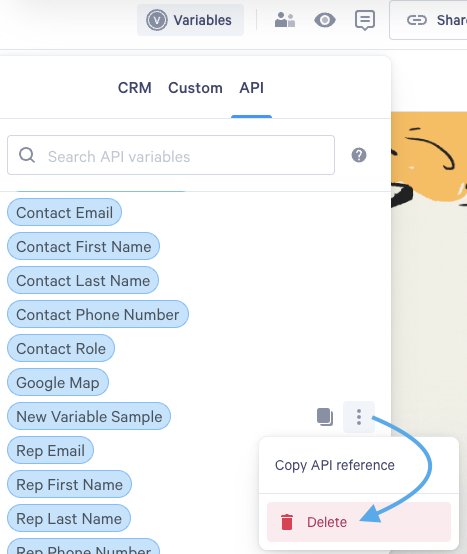
Note: If you remove an API Variable from the list, it will remain in any Templates that are already using it.
Variables FAQ
Q: What if I want to use this Template with my CRM?
A: If you're using Pipedrive or Zoho, you can use this template directly with your CRM — API Variables and CRM Variables can now coexist in the same template. If you're using HubSpot or Salesforce, API Variables aren't supported for those integrations. You can still convert a Qwilr template to a CRM template at any time, but you'll need to replace API Variables with your CRM Variables in the process.
To change the Template to a CRM template, open the Variables tool. Click on the CRM tab. If you haven't yet connected a CRM integration, you'll see a button to get started with that.
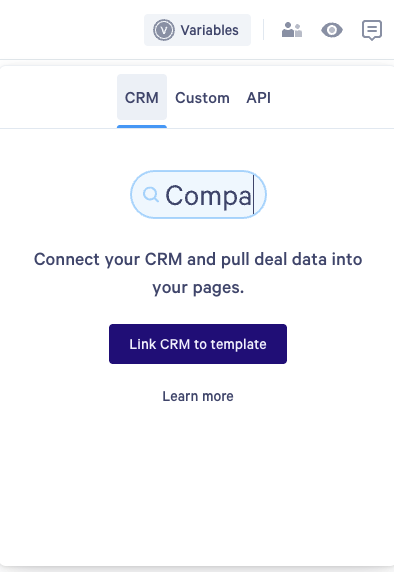
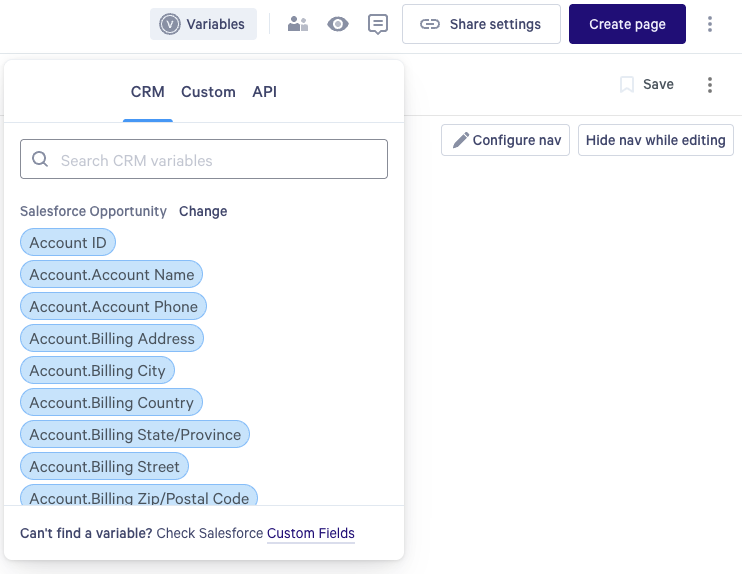
If you have already connected a CRM, you'll see its name in place of the CRM tab:
Q: Can I use Variables in Blocks?
A: Yes, Variables can be used in Blocks. However, they will only populate with data when the Blocks are part of the base template at the time of proposal generation. If you add Blocks with Variables after the proposal has been generated, the Variables will not automatically update with the correct information.
Q: Can I replace existing text with a Variable?
A: Yes. Simply highlight the text you want to replace, then use the Variable option in the editor toolbar. The selected text will be replaced with the Variable, making it quicker to add Variables while editing your template.
Got questions? Email help@qwilr.com for answers to your questions.